Air-Source Heat Pumps
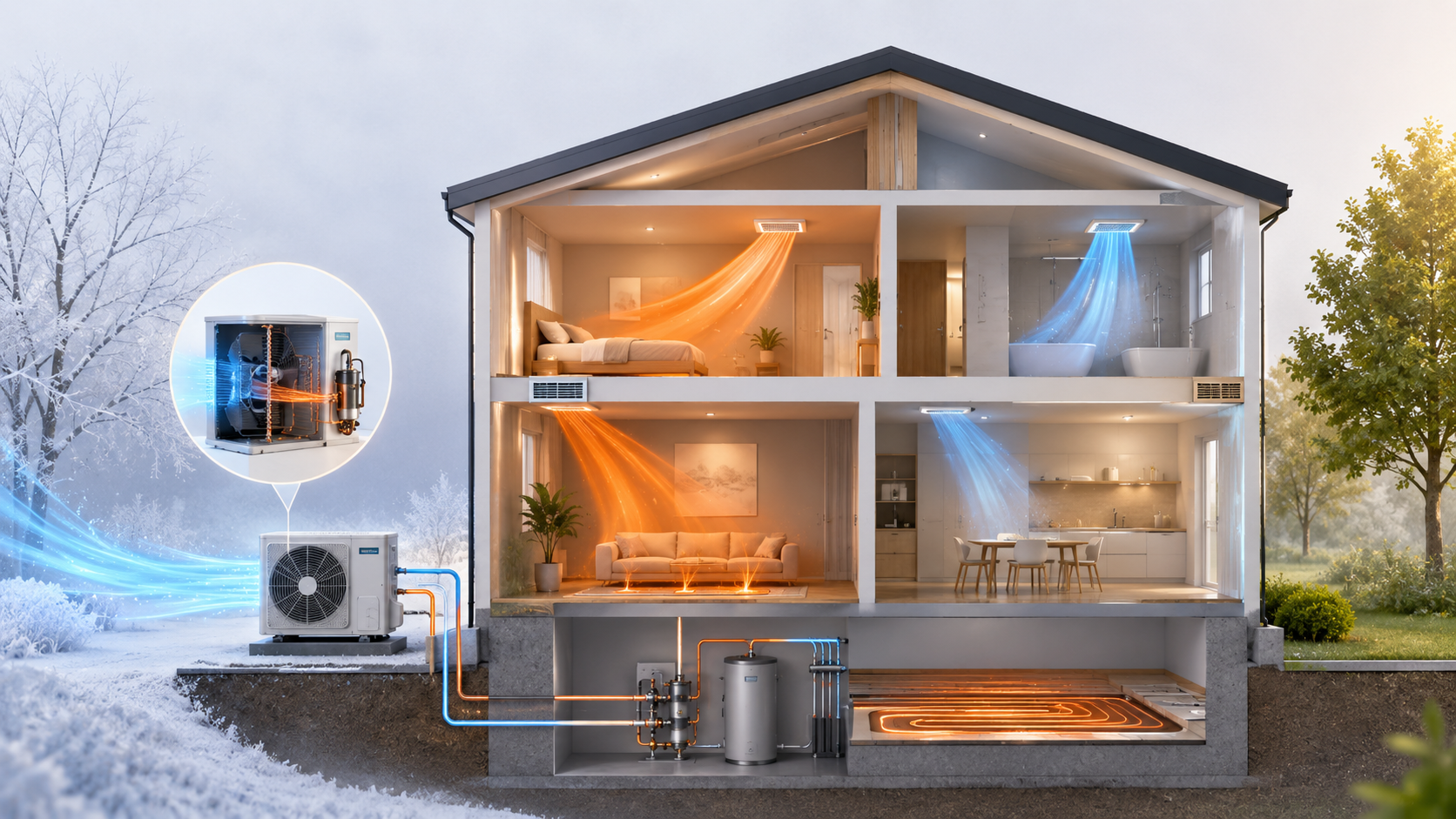
Air-source heat pumps are systems that use outdoor air to help heat and cool a building. In winter, they collect heat from the outside air and transfer it indoors. In summer, they can reverse the process by removing heat from inside the building and releasing it outside.
This makes air-source heat pumps a practical solution for buildings that need both heating and cooling from one system.
How Air-Source Heat Pumps Work
An air-source heat pump usually has an outdoor unit and one or more indoor units. The outdoor unit collects or releases heat, while the indoor unit distributes warm or cool air inside the building.
During heating mode, the system absorbs available heat from the outdoor air. The refrigerant inside the system carries this heat to the indoor unit, where it is released into the building.
During cooling mode, the process works like an air conditioner. The heat pump removes heat from indoor air and transfers it outdoors.
Why Air-Source Heat Pumps Are Popular
Air-source heat pumps are popular because they are usually easier to install than systems that require underground pipes or access to a water source. They can be installed in many types of buildings and are often suitable for both new construction and renovation projects.
They can also reduce the need for separate heating and cooling equipment, since many systems can provide both functions.
Ducted and Ductless Options
Air-source heat pumps can be designed in different ways.
A ducted air-source heat pump uses ductwork to distribute air throughout the building. This can be a good option for buildings that already have an existing duct system.
A ductless mini-split heat pump uses indoor wall-mounted, ceiling-mounted, or floor-mounted units. This can be useful for homes without ducts, additions, apartments, basements, or individual rooms that need better temperature control.
Benefits of Air-Source Heat Pumps
Air-source heat pumps can offer several benefits:
They can provide heating and cooling in one system.
They can improve energy efficiency compared with some traditional heating systems.
They are often easier to install than ground-source systems.
They can support lower-emission buildings when powered by cleaner electricity.
They can improve comfort by providing steady temperature control.
Things to Consider
The performance of an air-source heat pump depends on the climate, the quality of the building insulation, the system size, and the installation quality.
In colder climates, choosing the right model is especially important. Some systems are designed specifically for cold-climate performance, while others may need backup heating during very low temperatures.
Before installing an air-source heat pump, it is important to consider the building’s heating and cooling needs, available space for equipment, existing ductwork, insulation level, and local climate conditions.
Final Thought
Air-source heat pumps are one of the most accessible heat pump options for many homes and buildings. They use outdoor air as a source of energy, provide both heating and cooling, and can play an important role in creating more efficient and sustainable buildings.